2027–2028 Crossing Antarctica
The Polar Dogs Antarctica Expedition
- 2,000 kmOn skis
- 120Days on the ice, up to
- 80 kgSledge weight
- −50 °CAnd colder, with windchill
- 3,100 mHighest point
- 7,000Around calories a day
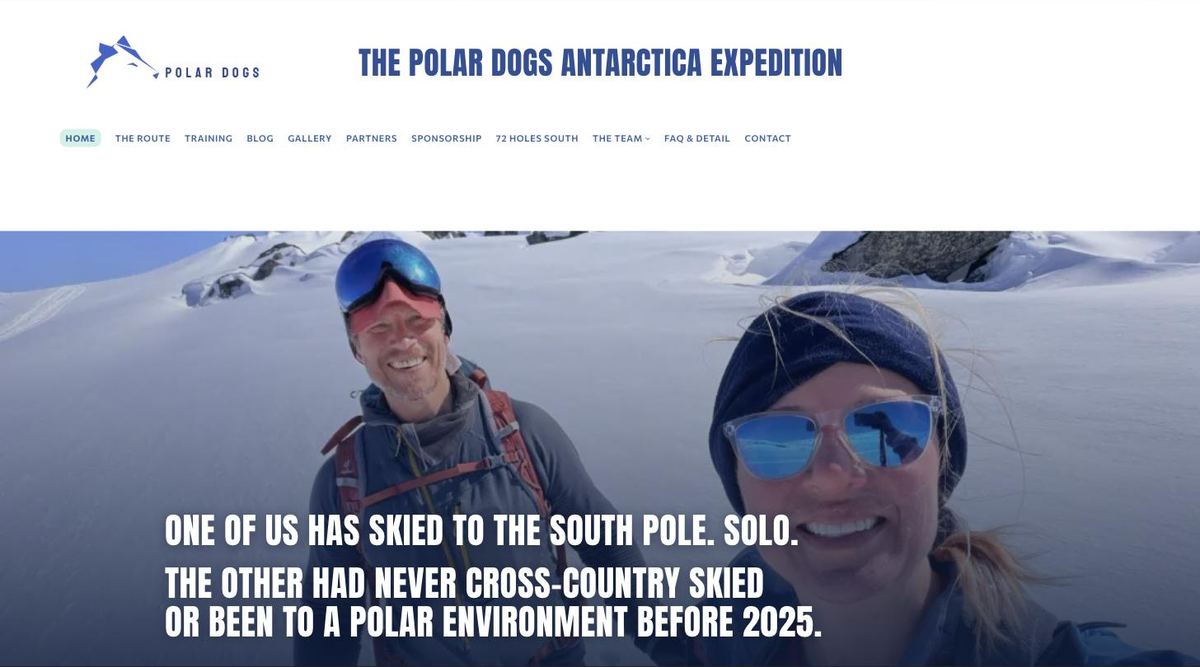
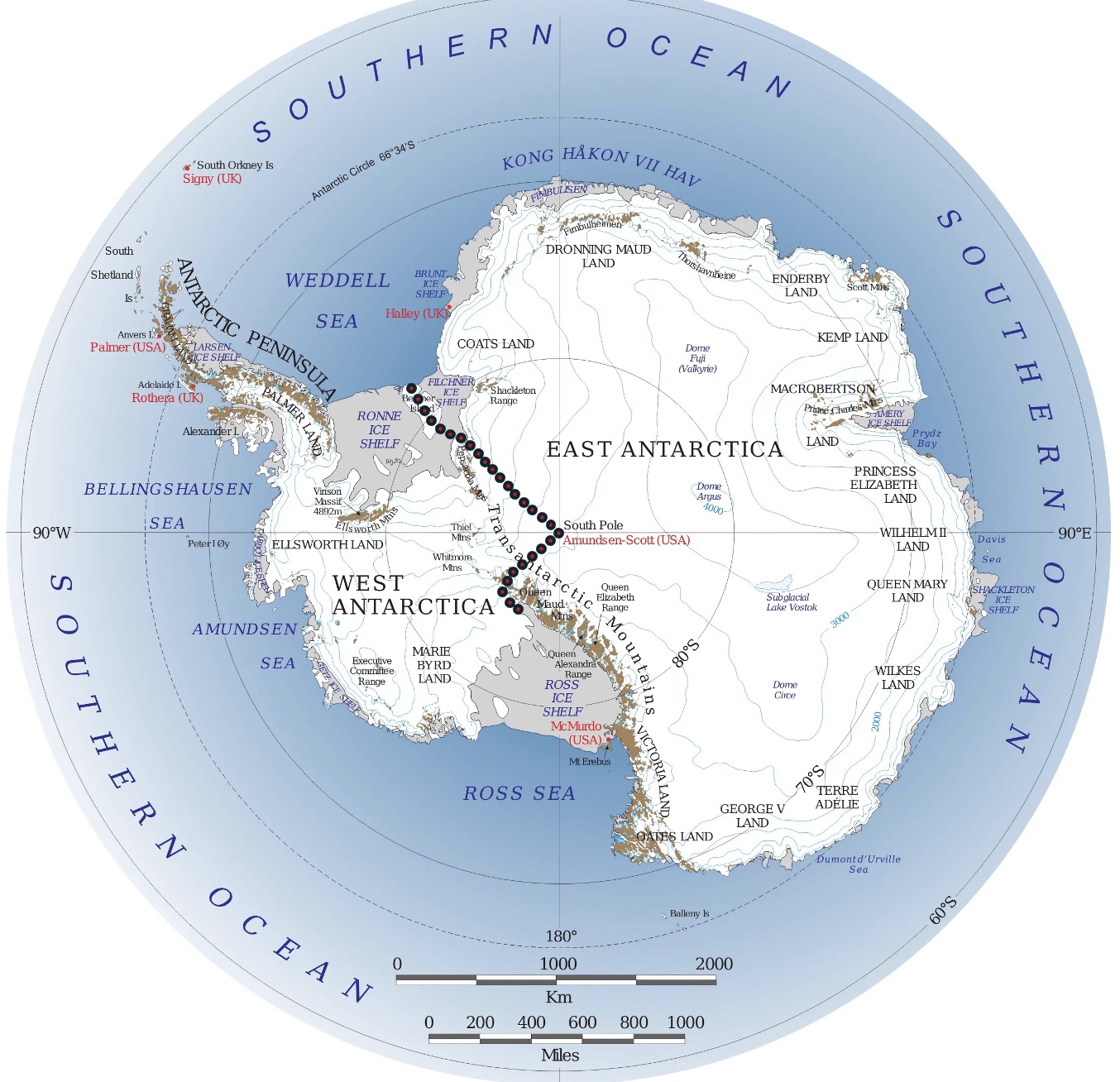
From November 2027, Erica Stanford and polar explorer Ben Weber will ski 2,000 km across Antarctica, from Berkner Island via the South Pole to the Ross Ice Shelf, as the Polar Dogs Antarctica Expedition.
It will be up to 120 days on the ice, skiing up to 12 hours a day, hauling 80 kg sleds and climbing to 3,100 m at the highest point, in temperatures down to −50 °C and winds that have been recorded at up to 200 mph.
Why Antarctica
I had always wanted to go to Antarctica. I have had a lifelong fascination with deserts and remote places. I had watched a lot of polar expeditions and assumed that the people who did them were somehow superhuman, and that it was not something I would be able to do.
When I met Ben and asked him how he had trained for his solo South Pole crossing, he broke it down into a series of manageable steps. Polar survival and training courses, fitness and strength training, training expeditions and fundraising. I knew that I could do each individual step, and that if I could do all of them, I could cross Antarctica. As soon as I realised I could conceivably do it, I knew I had to cross Antarctica too!
I asked him, that same evening (the first time we had ever met), whether he was planning to go back and whether I could come. There was a route he had wanted to do ever since he got back from the Pole, and he was happy enough to have a polar novice come along.
That was in November 2024. It took me until January 2025 to fully commit. I knew that whilst Antarctica and some of the training trips would be fun, the training would also be hard, would be a big time commitment, and would involve saying no to almost everything other than training and work. Ben was the first polar explorer I had ever met (I have since happily met lots!), and I knew that the chance to go to Antarctica with a chilled, friendly and experienced polar explorer who was happy for me to come along was too good an opportunity to miss.
The moment I did, Ben said that if we were going to the Pole and doing all the training and fundraising anyway, we might as well cross the whole continent. By this point I was in, and this one took zero hesitation.
The fundraise
The crossing costs $650,000. That is the logistics, the food and the kit we still need, and it is separate from the training we have already done and paid for.
If you would like to be part of our Polar Dogs Antarctica Expedition, our sponsorship page gives options for partners and sponsors, including naming rights and branding on the tent and sleds, product testing, content and talks. If none of that quite fits, we are happy to design something that does.
The route
The team
The Polar Dogs team
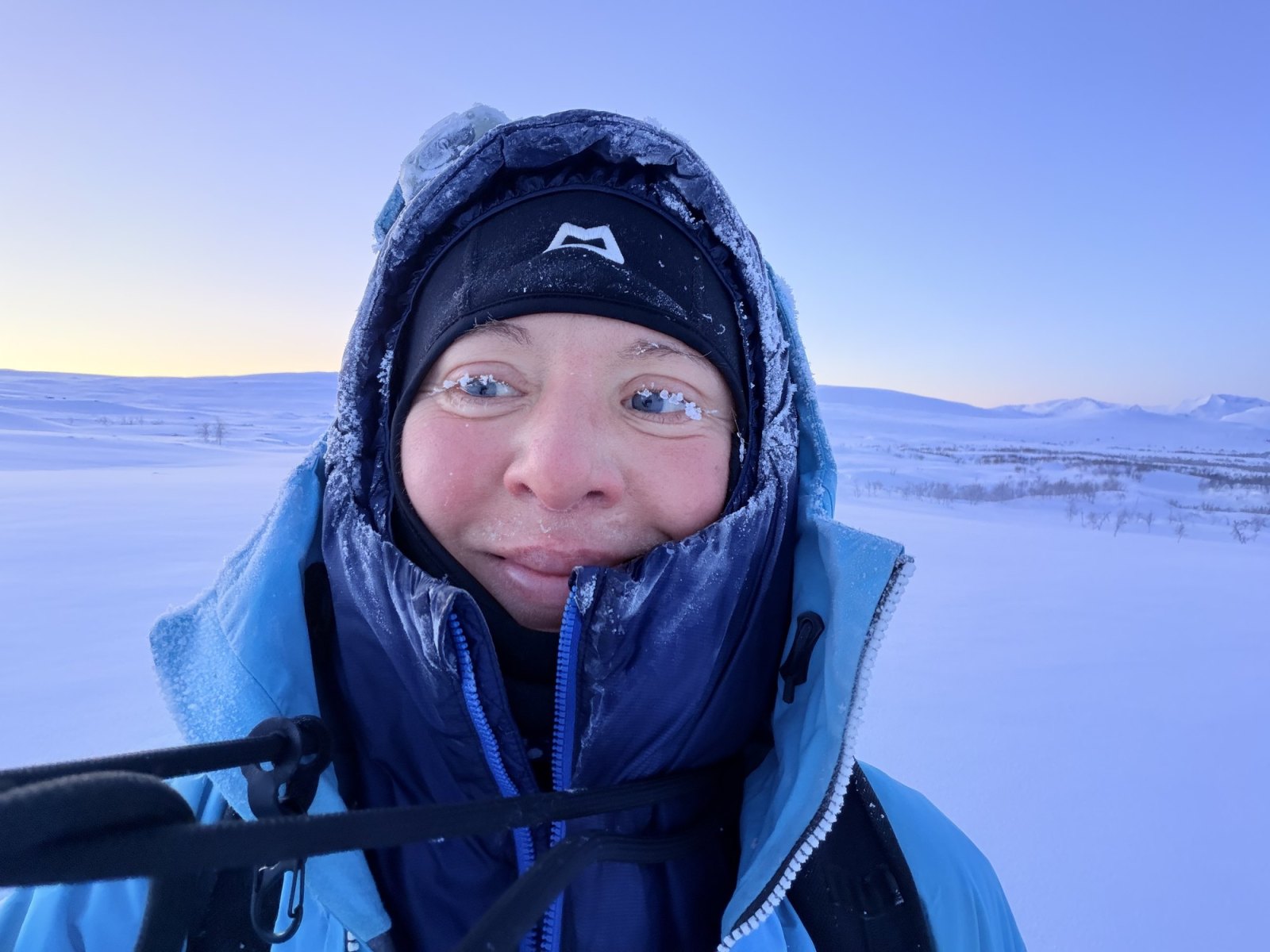
Erica Stanford
Author, keynote speaker and technology risk adviser. Began polar training in 2025. Since then, hut-to-hut ski touring in the Polar Night in Arctic Finland at −40 °C, two weeks of polar survival and expedition training in Norway with ALE guide Hannah McKeand, eight days hauling a pulk across the Hardangervidda, and crevasse rescue training below Mont Blanc. Before that, Land’s End to John O’Groats and the North Coast 500 by bike, and the Camino de Santiago on foot in 20 days.
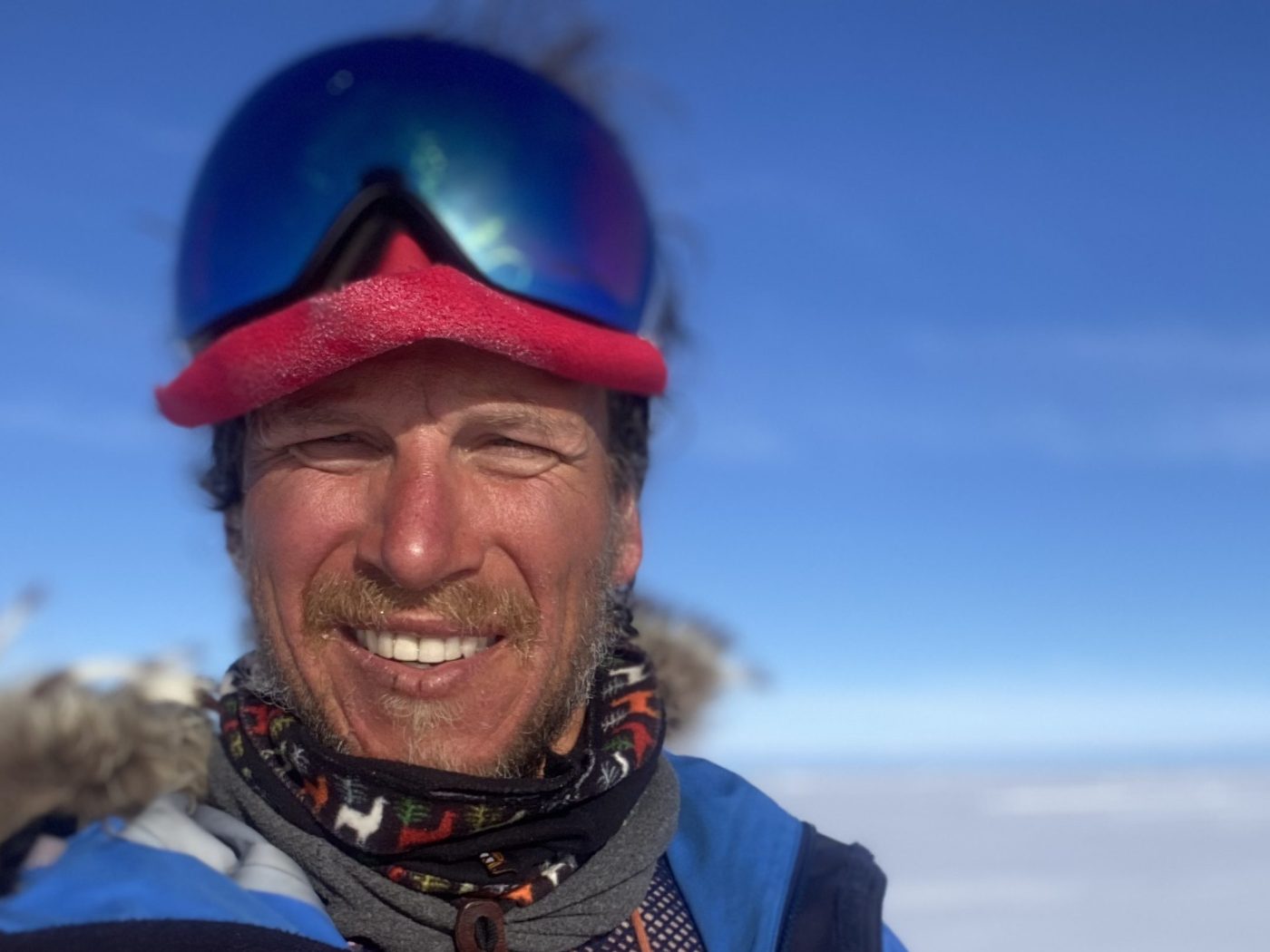
Ben Weber
Polar explorer. Skied solo from Hercules Inlet to the South Pole over 58 days and more than 1,200 km, from November 2022 to January 2023. Ben also skied 600 km across the Greenland icecap in May 2022 and cycled and skied south to north across Canada in winter 2014–2015. Ben is currently finishing a PhD in corporate sustainability at the University of St Andrews, and works as a research director.
Training
Training for our Antarctica crossing
Antarctic Logistics & Expeditions (ALE) is very specific about the training you have to do to be approved to cross Antarctica. This is the training I have done so far, and what is up next.
Cross country ski training
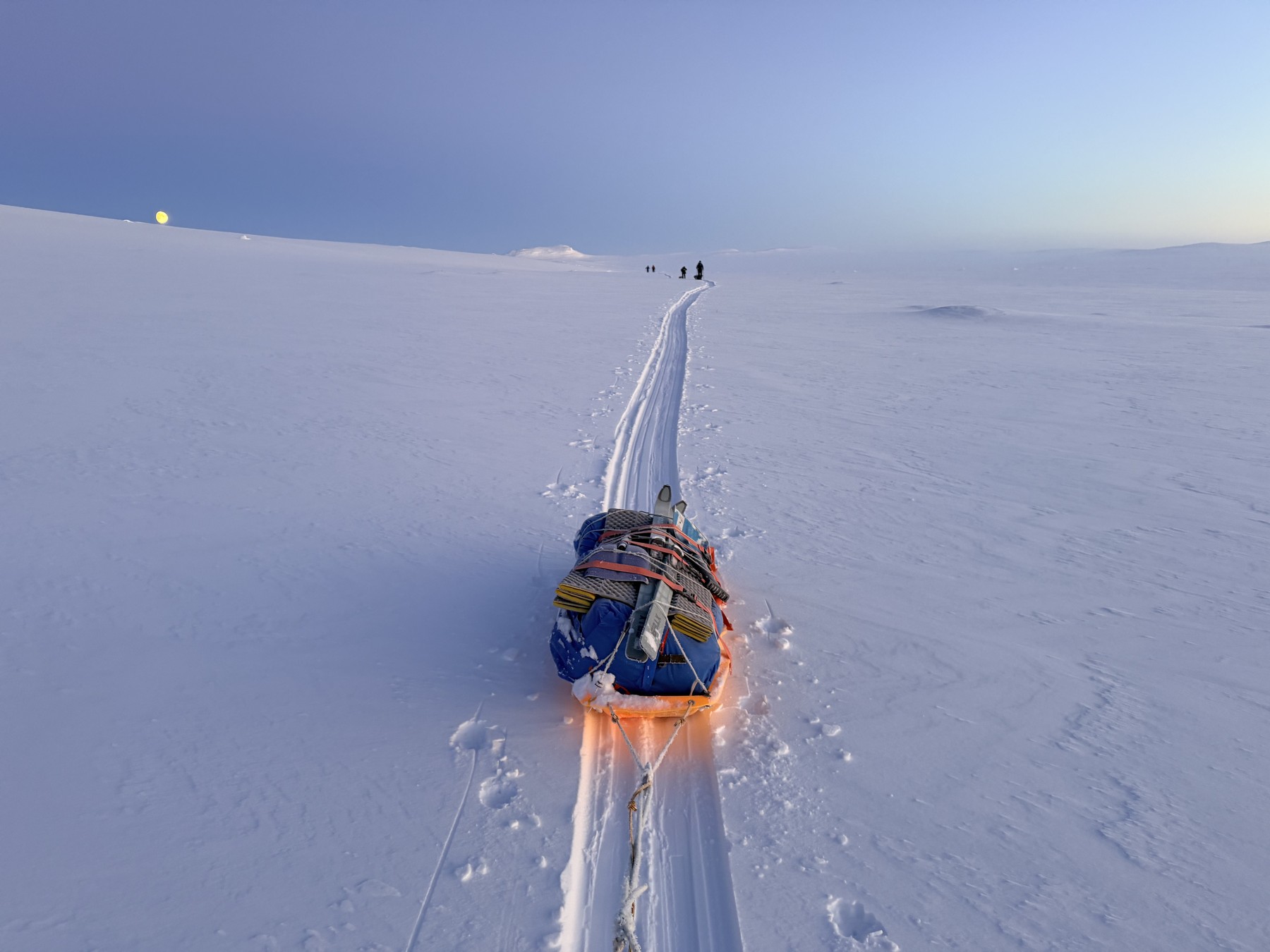
The first stage of preparing to cross Antarctica was learning to cross country ski. Or really, to ski at all. I had skied a couple of times as a child and not since, so this was close to starting from scratch. I booked onto a week-long hut-to-hut expedition in Halti National Park in Finnish Lapland, my first time on cross country skis and my first time skiing with a pulk behind me.
Halti sits about 200 miles north of the Arctic Circle, and in December the sun does not come up at all. It was dark for around 20 hours a day and never got fully light, so we skied by head torch for most of it, hauling sleds with our food, sleeping bags, medical kits and warm clothing. The huts were off grid, so it was head torches at either end of the day too. In the few hours we could see, the landscape was indescribably beautiful. My first time in the Arctic, and it got down to −40 °C. A good polar initiation.
Polar expedition and survival training
The second stage of preparing for our Antarctica crossing was two weeks of polar expedition and survival training with Antarctic Logistics & Expeditions (ALE)’s Hannah McKeand. Completing polar expedition training with an ALE recognised guide is an essential part of being approved to go.
Hannah holds two Guinness World Records relating to Antarctica. The first, in 2006, for setting the then speed record for skiing solo and unsupported to the South Pole in 39 days, 9 hours and 33 minutes. The second, in 2012, for making more expeditions to the South Pole than anyone. Hannah has hauled a sled more than 6,000 miles in Antarctica, and has worked seasons there since 2013, running ALE’s Emperor Penguin and South Pole camps.
This training was in Finse, a village at 1,222 metres accessible only by train on the beautiful Oslo to Bergen line, or on skis (or on foot in summer), with no road going to it. The village sits below the Hardangerjøkulen glacier and at the edge of the Hardanger plateau and is popular as a polar training ground. Polar expeditions have trained there for more than a century. Amundsen, Scott, Shackleton and Nansen all went to Finse before leaving for Antarctica. It is dry, cold, exposed and almost entirely without natural shelter, which is about as close to Antarctic conditions as you can get without going there.
The first week was learning how to set up tents in snow, melt water and cook in a tent, repair a stove, navigate in the polar environment and in whiteout conditions, what to wear, what not to wear and how not to wear too much, what to eat and how much you have to eat. The second week was a training expedition across the Hardanger plateau, putting all of it into practice under Hannah’s watchful guidance.
Our first training expedition together
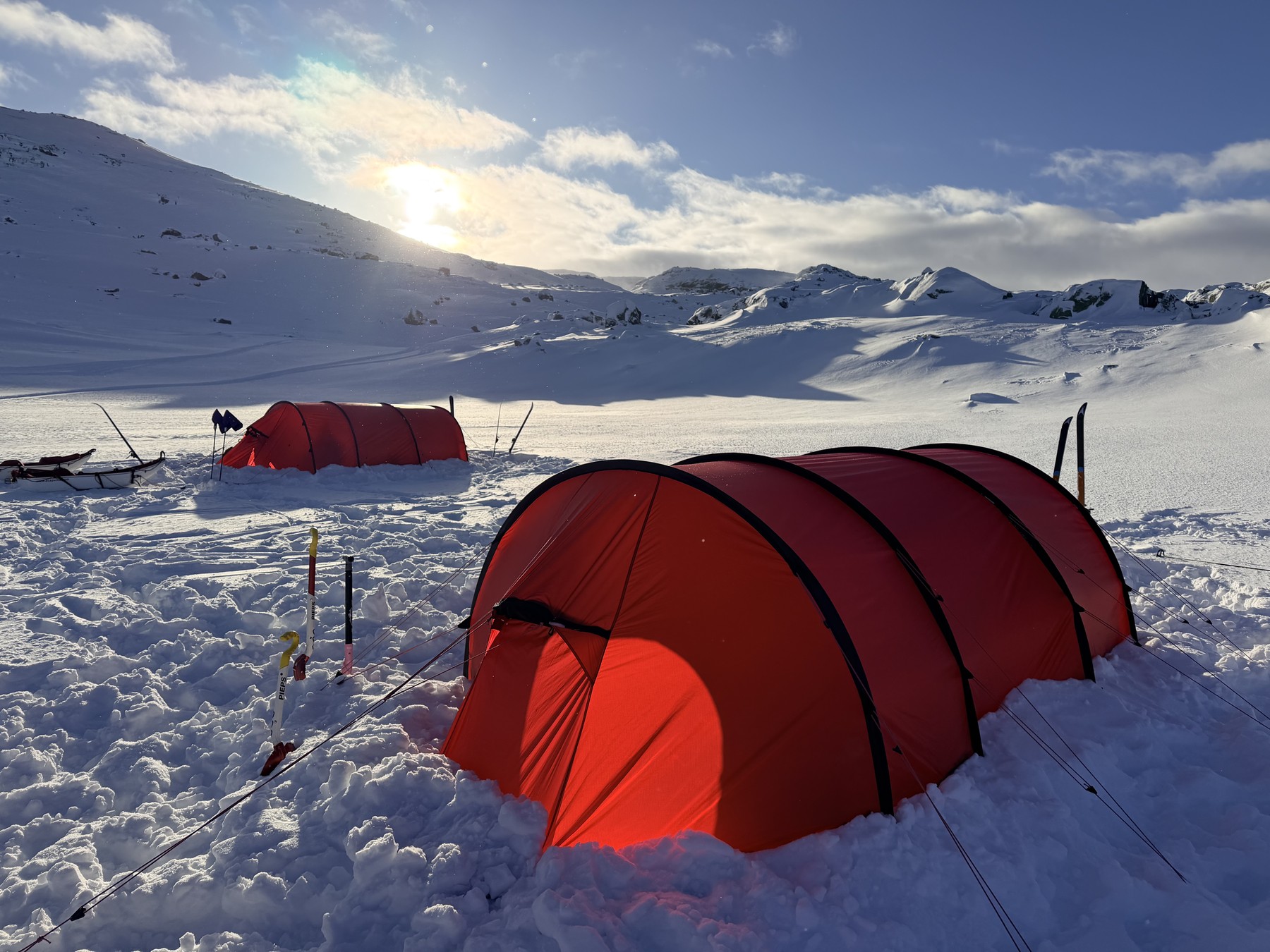
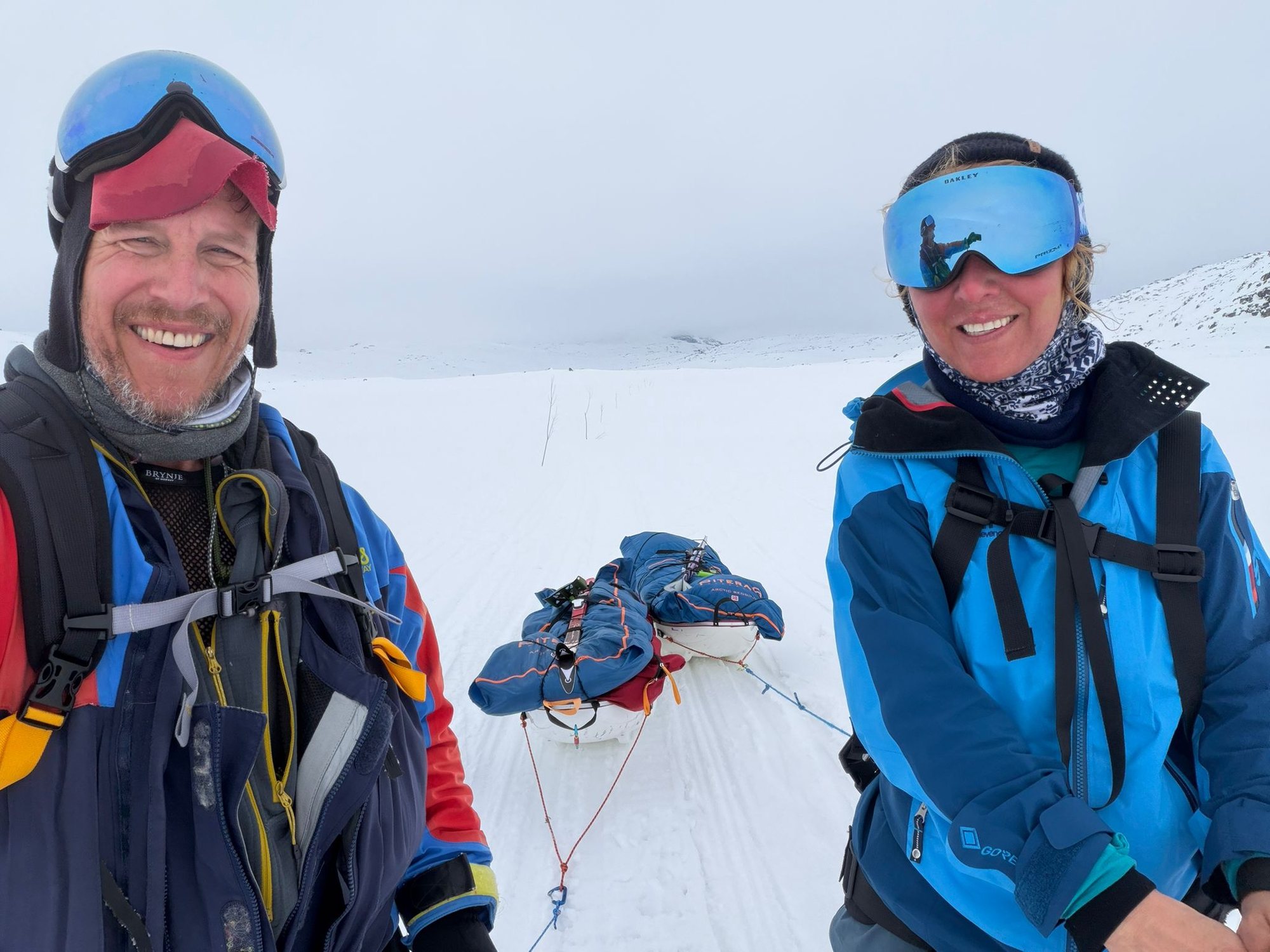
The next stage was our first training expedition as team Polar Dogs. We went back to Finse in Norway to borrow pulks and a tent from Hannah, then set out for eight days, heading north of Finse before going back around the Hardanger plateau.
It is a beautiful area, but we had seven days of cloud, whiteouts, a blizzard and a hailstorm, with very little visibility, before it turned warm enough for the hail to become rain. Our down jackets, sleeping bags and the rest of our kit got wet through. It is not safe to carry on with gear that is soaked through and no means of drying it, in polar conditions that can turn much colder very quickly, so we skied back to Finse and dried everything in the hotel’s drying room. Rain will not be a problem in Antarctica, where it will never get anywhere near warm enough for it. Back at Finse we then had one perfect day of sun and blue skies, so we went out again without the sleds and skied for the day.
For ALE to approve our application to cross Antarctica, we have to do a minimum number of weeks together on unguided training expeditions. This one was unguided, but it does not count towards those weeks, because there are prepared routes in this area marked with twigs. For this expedition, we largely followed them, although one day the visibility was so poor that we could not see the twigs, or much past the ends of our skis.
Our purpose for this expedition was to get used to working together, to give me more practice at setting up tents and cooking in snow, to give me much-needed time on skis, and it was also Ben’s first ski expedition since he got back from the South Pole in 2023. We got into a good routine of skiing for 80 minutes and breaking for 10, covered good distances, and got quick at putting the tent up and cooking. We also worked out, after a few goes at it the hard way, a better method for getting the pulks up steep hills. We leave one pulk at the bottom, attach the other to both of us and ski up with it together, then go back down for the second. Going downhill, we reattach the pulks to our fronts, take our skis off and walk down with them on a short rope in front of us, rope brakes on so they slow down and cannot pull us with them. Happily, Ben says the hills we went up and down on this trip were steeper than anything he went up in Antarctica.
Ski technique training
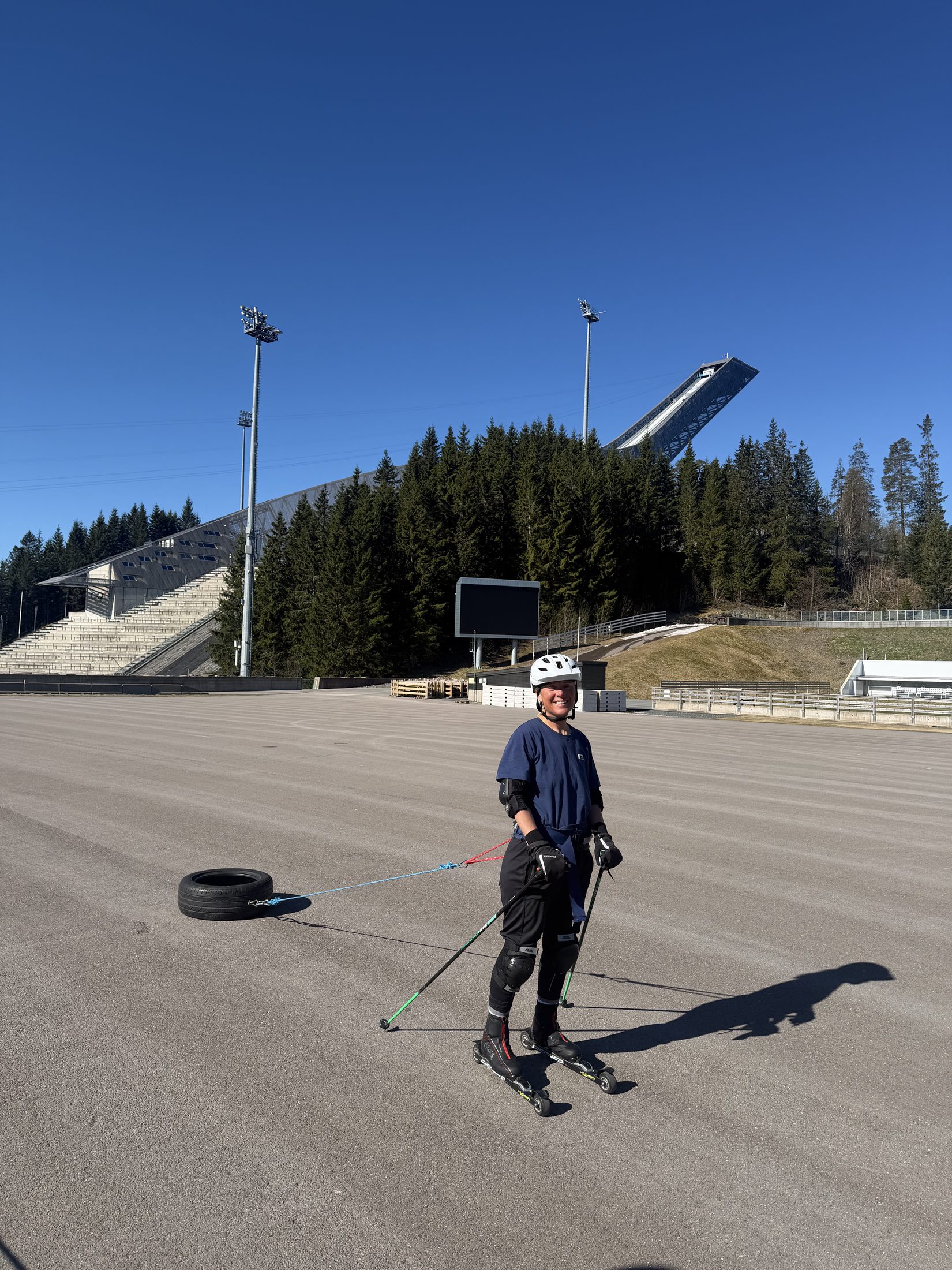
After our training expedition we took the train back to Oslo for three days with expert cross country ski coaches on an indoor snow track, working on technique and efficiency. It included a session of roller skiing outdoors and on a roller ski mill, which we will need to keep practising to hold our technique in the months when we cannot train on snow.
Over 2,000 km we need every efficiency gain we can get, to be sure of reaching our end point before the Antarctic winter comes in and it gets too cold and windy to carry on.
Crevasse rescue training
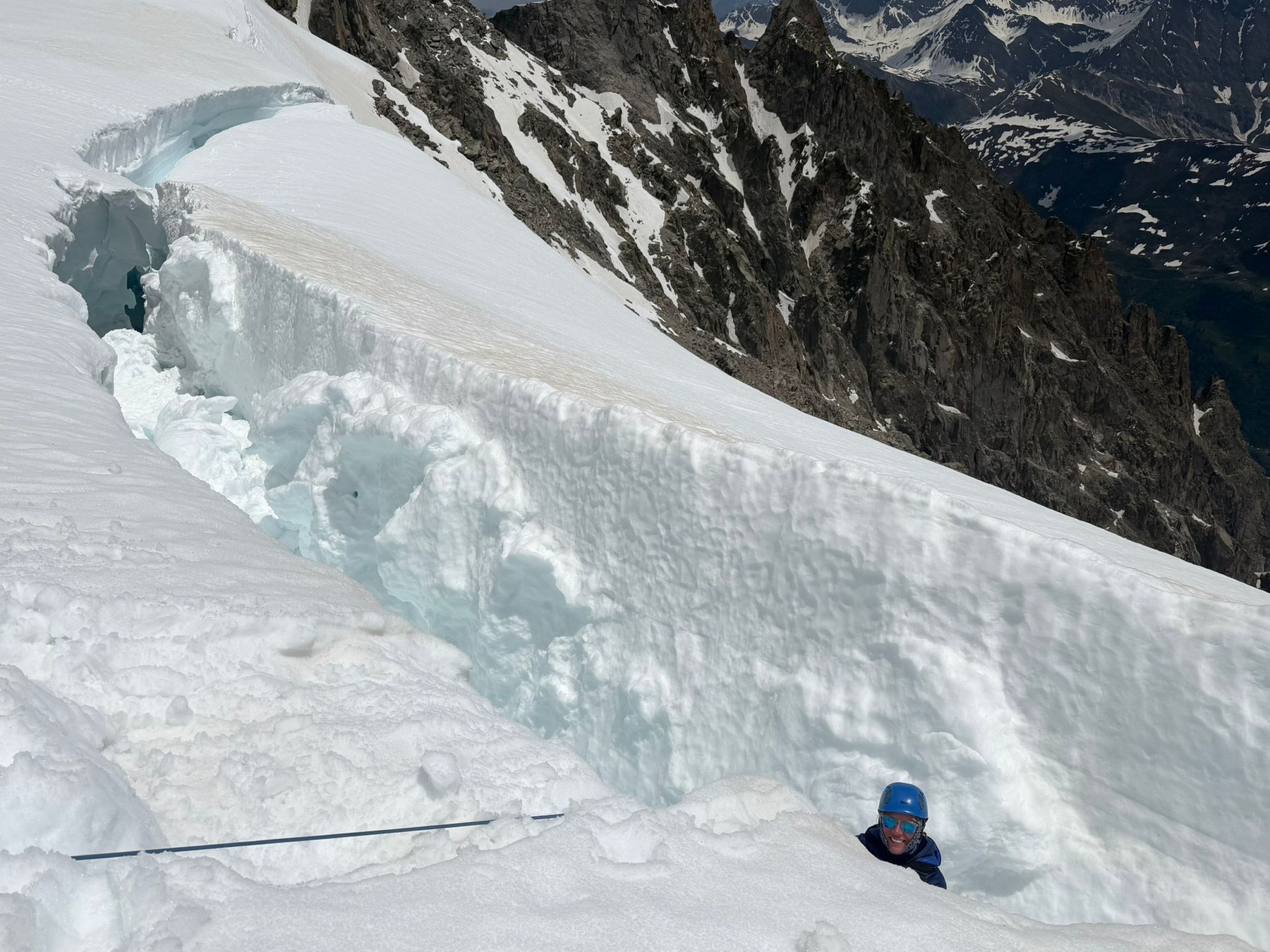
The next step in preparing for our Antarctica crossing was crevasse rescue training. One of the criteria we have to meet to be accepted for the crossing is to confirm that we have experience of recognising crevassed areas and of climbing out of one.
We went to Chamonix for three days with ALE’s crevasse expert Simon Abrahams, who is based there. Two of those days were at around 4,000 m, just below the summit of Mont Blanc, an area known for being heavily crevassed. We learnt and practised the rope and climbing systems needed to get ourselves out of a crevasse, and to pull the other person out if they are hurt and cannot climb. We also covered how to rope together to ski more safely in crevassed areas.
Route planning with ALE’s crevasse expert
Once we were back down from the mountain, we went through our own route with Simon, using satellite imagery and his years of accumulated Antarctic crevasse data. We went over the crevassed sections of the route to see exactly where the crevasses are and how many of them we would be dealing with.
Our original plan had been to go up the Support Force Glacier and down the Reedy Glacier. Both turned out to have thousands of crevasses running for miles on end. So we changed the route. We now go up Wujek Ridge, which is far less crevassed, and come down the Leverett Glacier instead of the Reedy, which has significantly fewer crevasses again. It is a small change on the map, and it takes miles upon miles of crevasse field out of the expedition and massively reduces the risk.
Up next
Polar medical training
In January 2027 I go to Svalbard for ten days of wilderness first responder training in a polar environment. It is an internationally recognised qualification, built around making critical medical interventions and decisions about evacuation a long way from help. Svalbard is about 805 miles north of the Arctic Circle, so it will be polar night and dark all day, at around −30 °C.
More crevasse rescue training
In September 2027 we go back to Chamonix for more practice at climbing out of crevasses. Falling into one is the main risk we face in Antarctica.
ALE and Simon will give us a route that avoids crevasses as far as possible, but some are unavoidable, so the skills that matter most are navigating accurately enough to hold that route, then recognising the signs of a crevasse and going wide around it rather than over it.
When we trained in 2026 we practised climbing out, but under kinder conditions than the real thing. We were lowered in already tied to a rope, with an anchor we had built beforehand, in boots and crampons rather than on skis. We want to go back and do it enough times that climbing out is closer to automatic, so that if we do fall in we are more likely to remember what to do and less likely to panic. We also want to practise getting out with skis on, and with a sled, or a heavy replica of one, in the crevasse with us, which makes it much harder. And we want it fresh, as close to leaving as we can get it.
At least five weeks of unguided training expeditions, just the two of us
The weeks that count towards ALE’s requirement for unguided time together.
Ongoing
- Tyre pullingThe nearest thing to hauling a loaded pulk when there is no snow
- Strength trainingYear round, and the bulk of the work between trips
The expedition
See our crossing in full at polardogs.uk
Our route, more on our training, our blog, lots of photos of all our previous trips and of the training, how to partner with or sponsor us, 72 Holes South (playing 72 holes of golf across the Antarctic continent during our crossing) and FAQs.